
By now I’ve written about assessing networks, monitoring them, managing them day to day, and the devices that make it all possible. There’s one piece missing, and it’s the one that makes the other four consistent instead of ad hoc: the network security policy — the written rules that say how all of it is supposed to work, so it doesn’t depend on tribal knowledge and whoever happens to remember how things were configured three years ago.
What Is a Network Security Policy?
A network security policy is a document that defines the rules and standards for securing an organization’s network — covering architecture, device configuration, access control, and monitoring requirements — so that network security decisions are consistent and documented rather than dependent on individual memory.
This is a child document, not a standalone one. It sits underneath the broader information security policy the same way the data security policy does — narrower, more technical, focused specifically on the network layer rather than the whole organization’s security posture.
What a Network Security Policy Should Include
- Network architecture standards — segmentation requirements, how zones are defined (guest, internal, DMZ, restricted), and the principle that traffic between zones is denied by default unless explicitly allowed.
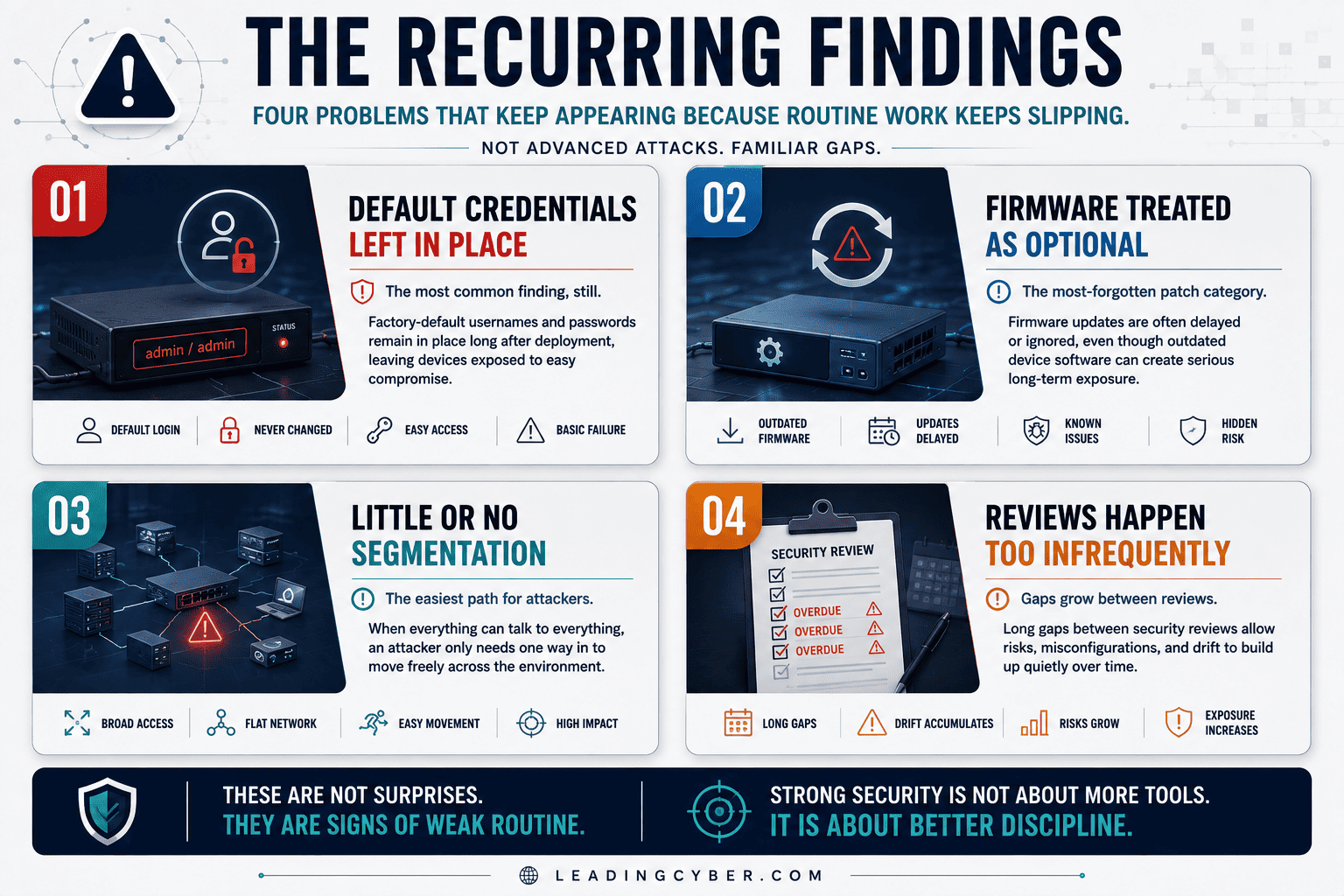
- Device configuration baselines — the minimum hardening standard every network device must meet before going into production: no default credentials, required firmware currency, disabled unnecessary services.
- Access control requirements — who can administer network devices, what authentication is required (MFA is table stakes for administrative access), and how those permissions get reviewed.
- Remote access rules — VPN requirements, approved remote-access methods, and explicitly what’s prohibited (direct exposed RDP being the classic example nobody should still be running).
- Wireless security standards — minimum protocol requirements, guest network isolation rules, and the process for approving any new access point.
- Monitoring and logging requirements — what must be logged, for how long, and the baseline expectation that ties directly into network security monitoring actually being implemented, not just aspirational.
- Change management — how network changes get approved, tested, and documented before deployment, closing the door on the “quick fix nobody wrote down” that becomes next year’s mystery configuration.

Why This Policy Gets Skipped
In my experience, network security policy is one of the more commonly missing documents, and the reason is almost always the same: the network “already works,” so writing down the rules feels like paperwork rather than protection. Then a new admin joins, configures a device slightly differently than their predecessor would have, and a segmentation gap opens that nobody notices until an assessment finds it a year later.
The policy isn’t there to slow down good engineers. It’s there so that good engineering decisions survive staff turnover, and so the standard is explicit enough that “we’ve always done it this way” has an actual written answer behind it.
Making the Policy Enforceable
- Tie it to configuration templates. A policy that says “harden all devices” is aspiration. A policy backed by an actual baseline configuration template that new devices get built from is enforcement.
- Audit against it, not just around it. Every network security assessment should explicitly check compliance against this specific document, not just general good practice.
- Assign named ownership, the same lesson that applies to every policy document in this series — this one owned by whoever runs network security management day to day, since they’re the ones actually implementing it.

Key Takeaways
- A network security policy documents the rules for architecture, device configuration, access, remote access, wireless, monitoring, and change management
- It’s a child of the information security policy, narrower and more technical, focused specifically on the network layer
- Without it, network security depends on tribal knowledge that doesn’t survive staff turnover
- Enforceability comes from configuration templates and audits, not just the written document
- Ownership belongs with whoever runs network security management day to day


Frequently Asked Questions
What is a network security policy?
A network security policy is a document defining the rules and standards for securing an organization’s network, covering architecture and segmentation, device configuration baselines, access control, remote access rules, wireless standards, monitoring requirements, and change management. It sits as a child document under the broader information security policy, focused specifically on the network layer.
What should a network security policy include?
Seven core areas: network architecture and segmentation standards, device configuration baselines, access control requirements for network administration, remote access rules, wireless security standards, monitoring and logging requirements, and change management procedures. Each should be specific enough to build an actual configuration template from, not just a general statement of intent.
Why is a network security policy important?
Without a documented policy, network security decisions depend on tribal knowledge — whatever the current administrator remembers or prefers — which doesn’t survive staff turnover and often drifts silently over time. A written policy makes network security consistent, auditable, and enforceable, and it’s usually what a network security assessment checks compliance against.
How is a network security policy different from network security management?
The policy is the written rulebook; management is the ongoing operational work of actually running the network according to those rules. A network security policy defines what should happen — segmentation standards, device baselines, access requirements — while network security management is the day-to-day discipline of implementing and maintaining those standards in practice.
How do you make a network security policy enforceable?
Back it with actual configuration templates that new devices get built from, rather than leaving hardening requirements as an abstract statement. Audit compliance against the specific policy during network security assessments, and assign named ownership — typically whoever runs day-to-day network security management — so someone is accountable for keeping the policy current and enforced.
Who should own the network security policy?
Ownership typically belongs with whoever runs network security management day to day, since they’re the ones implementing the policy’s requirements in practice. Approval and resourcing should come from a more senior role — IT leadership, a CISO, or a vCISO — the same accountability structure that applies to the organization’s other security policy documents.