The first time I stepped into an IT leadership role, I relied on what had always worked for me: be the expert, solve the problem, move fast. For a while, it worked. Until it didn’t.
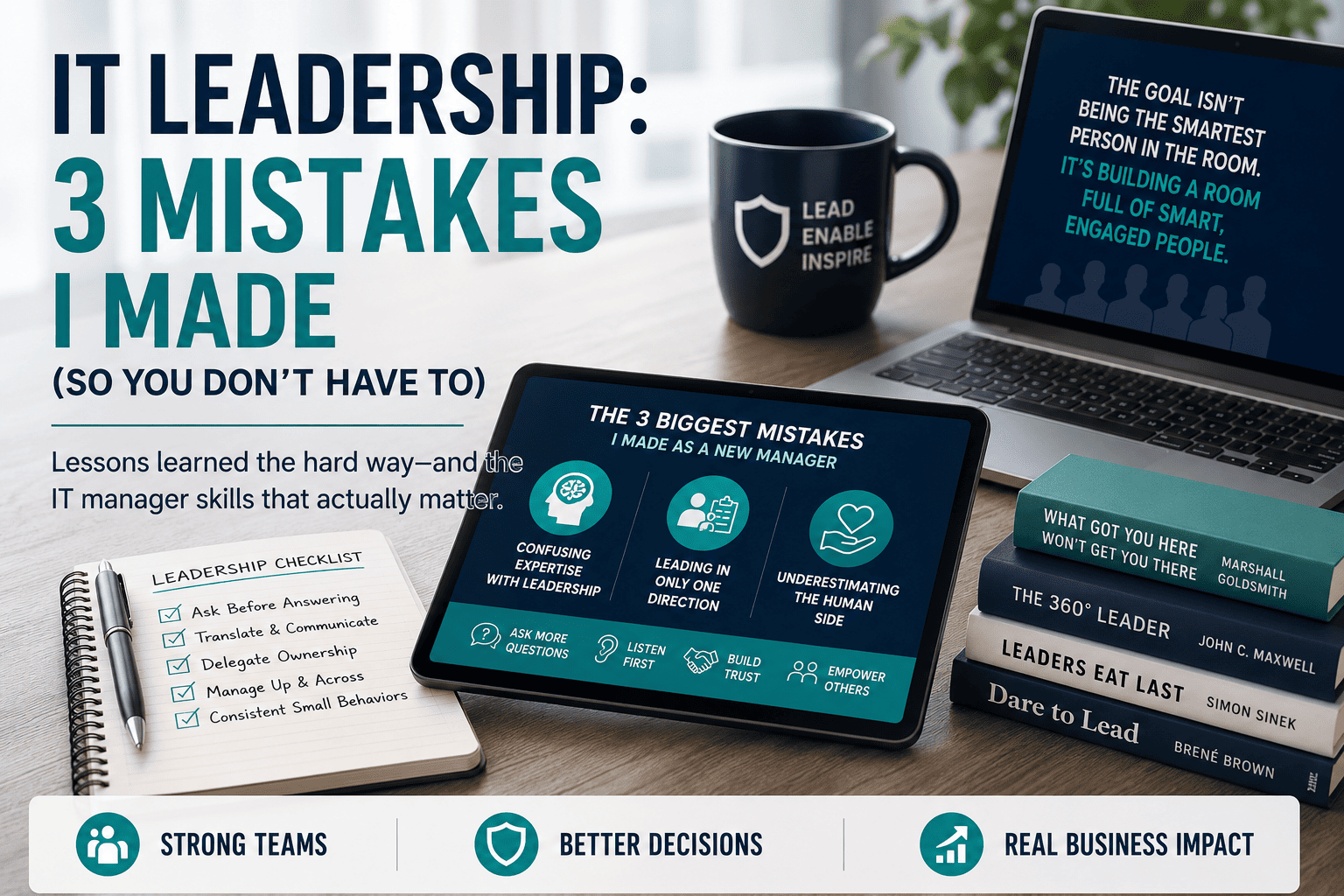
Looking back, my early leadership mistakes were common ones. I was promoted because I could deliver results, solve technical issues, and keep projects moving. Those skills mattered — however, they weren’t enough anymore. Leading a team required something different. Therefore, in this post, I’ll share the three biggest mistakes I made as a new manager, what I’d do differently now, and the IT manager skills I wish someone had told me about on day one.

What Is IT Leadership?
IT leadership is the practice of directing an organization’s technology teams, strategy, and operations so that technology delivers real business value. It spans IT leadership roles from team lead and IT manager up to director, VP, CIO, and CISO — but at every level, it rests on the same foundation: enabling people, not just managing systems.
That distinction matters. Technical management is about tasks, tickets, and uptime. IT leadership is about direction, trust, and alignment — with your team, your peers, and the business. Furthermore, it’s a skill set almost nobody is taught before receiving the title, which is exactly how I ended up making the mistakes below.
Why Technical Experts Struggle With IT Leadership
The transition from engineer to manager is one of the hardest career shifts in technology — and one of the least supported. Furthermore, the skills that get you promoted are rarely the skills the new role demands. You’re chosen because you’re the strongest problem-solver in the room. Then, overnight, your job becomes helping other people solve problems instead.
Nobody hands you a manual for that. Moreover, most organizations promote their best technical experts and simply hope leadership emerges on its own. It usually doesn’t — it gets learned the hard way, through mistakes like these.
Mistake #1: Confusing Expertise With IT Leadership
Early on, I believed my value as a leader came from having the answers.
So, when problems surfaced, I jumped in quickly. I solved issues, made decisions fast, and kept momentum going. It felt productive. Efficient, even. However, there was a downside.
I wasn’t creating space for the team to think, contribute, or grow. When the leader always has the answer, people eventually stop offering ideas.
If I could do it again, I’d ask more questions and speak less. I’d let discussions breathe. Some of the best ideas need a little silence before they show up.
Mistake #2: Leading in Only One Direction
I also thought leadership was mostly about managing the people who reported to me.
That was too narrow.
Real leadership happens in every direction. You lead your team, yes — but you also need to influence peers, build trust across departments, and manage expectations with senior leadership. This is especially true when leading technical teams, because your stakeholders often don’t speak your team’s technical language.

Back then, I focused on delivery. However, even strong work can lose impact if key stakeholders aren’t aligned. Now, I spend as much time building relationships and clarity as I do reviewing execution.
Mistake #3: Underestimating the Human Side
This one is a little ironic given my background in Industrial/Organizational Psychology, but it’s true.
I understood people mattered. I just didn’t always lead that way.
Leadership often comes down to small behaviors: how you listen, how you respond under pressure, whether people feel respected, whether they feel heard. Those moments seem minor. They’re not.
Today, I try to listen first, understand context, and respond with intention. When people feel heard, trust grows. And teams with trust move faster. Furthermore, this lesson extends beyond team dynamics — it’s the same reason most security failures trace back to people and process rather than technology. The human side is never the soft side. It’s the foundation.
What I’d Do Differently Now
If I were stepping into that role again, I’d focus less on being the smartest person in the room and more on building a room full of smart, engaged people.
I’d lead beyond the org chart. I’d pay closer attention to the small behaviors that shape culture. Because leadership isn’t about having all the answers — it’s about creating an environment where better answers emerge.

The IT Manager Skills That Actually Matter
If you’re a new manager making the transition from engineer to manager, these are the IT manager skills I’d prioritize. Moreover, these leadership skills for IT professionals share one trait: none of them appear on a technical certification.
- Asking before answering — resist solving; ask “What do you think we should do?” first
- Translating between audiences — turning technical detail into business impact for executives, and business pressure into clear priorities for engineers
- Delegating real ownership — handing over problems, not just tasks, and letting people own the outcome
- Managing up and across — aligning stakeholders before the work ships, not after
- Consistent small behaviors — listening fully, crediting publicly, staying calm under pressure

Best IT Leadership Books for New Leaders
No leader gets better alone. Therefore, these IT leadership books offer valuable perspective for anyone stepping into the role:
- What Got You Here Won’t Get You There by Marshall Goldsmith — why the habits that earned your promotion can hold you back as a leader
- The 360 Degree Leader by John C. Maxwell — leading up, across, and down, regardless of your title
- Leaders Eat Last by Simon Sinek — building teams where people feel safe enough to do their best work
- Dare to Lead by Brené Brown — the courage and vulnerability behind the human side of leadership
Key Takeaways
- Technical expertise gets you promoted — IT leadership is a different skill set entirely
- When the leader always has the answer, the team stops offering ideas
- Real leadership works in every direction: your team, your peers, and senior leadership
- Small behaviors — listening, respect, calm under pressure — compound into trust, and trust compounds into speed
- The goal isn’t being the smartest person in the room; it’s building a room full of smart, engaged people
Frequently Asked Questions
What is IT leadership?
IT leadership is the practice of directing an organization’s technology teams, strategy, and operations so that technology delivers business value. It covers roles from IT manager to director, VP, CIO, and CISO, and combines technical credibility with people skills: setting direction, building trust, aligning stakeholders, and creating the conditions for teams to do their best work.
What are the most common leadership mistakes new managers make?
The most common leadership mistakes include continuing to act as the technical expert instead of empowering the team, focusing only on direct reports while ignoring peers and senior stakeholders, avoiding difficult conversations, failing to delegate real ownership, and underestimating how much small daily behaviors — listening, respect, calm under pressure — shape team trust and performance.
What makes IT leadership different from technical work?
Technical work rewards personally solving problems; IT leadership rewards building a team that solves problems without you. Furthermore, IT leaders must translate between technical and business audiences, align stakeholders across departments, and create the conditions — clarity, trust, ownership — that let engineers do their best work. The measure of success shifts from your output to your team’s.
What skills does an IT manager need?
Beyond technical credibility, an IT manager needs to ask questions before giving answers, translate technical detail into business impact, delegate genuine ownership rather than tasks, manage expectations upward and across departments, and practice consistent small behaviors like active listening and public credit. Moreover, these people skills determine team performance far more than any additional certification.
How do you transition from engineer to manager?
Start by redefining your value: your job is no longer having the best answer but creating the environment where the best answers emerge. Ask more questions, speak less in discussions, delegate problems rather than tasks, invest deliberately in relationships with peers and senior leadership, and seek feedback early — most new managers repeat the expert habits that earned their promotion for far too long.
How can new IT leaders build trust with their team?
Trust is built through small, repeated behaviors: listening fully before responding, giving credit publicly and feedback privately, staying calm under pressure, admitting your own mistakes, and following through on commitments. Therefore, focus less on grand gestures and more on consistency — when people feel heard and respected, trust grows, and teams with trust move faster.